
How to choose a supplement fulfillment provider: a manufacturer’s guide



How to choose a supplement fulfillment provider: a manufacturer’s guide


We make supplements for brands across Europe. Every batch leaves our production line with a batch number, a full shelf life and labels that follow EU rules. Then a fulfillment provider, also called a 3PL, stores the stock, packs the orders and delivers them. From this moment, the 3PL decides how much shelf life and margin the brand keeps.
This guide explains how to choose a supplement fulfillment provider, stage by stage. It focuses on fulfillment for supplement brands in Europe, where labels, languages and payment habits are different in each country. If you know how to choose the right 3PL for supplement fulfillment, you protect both your product and your profit.
What to look for when choosing a 3PL for your supplement business
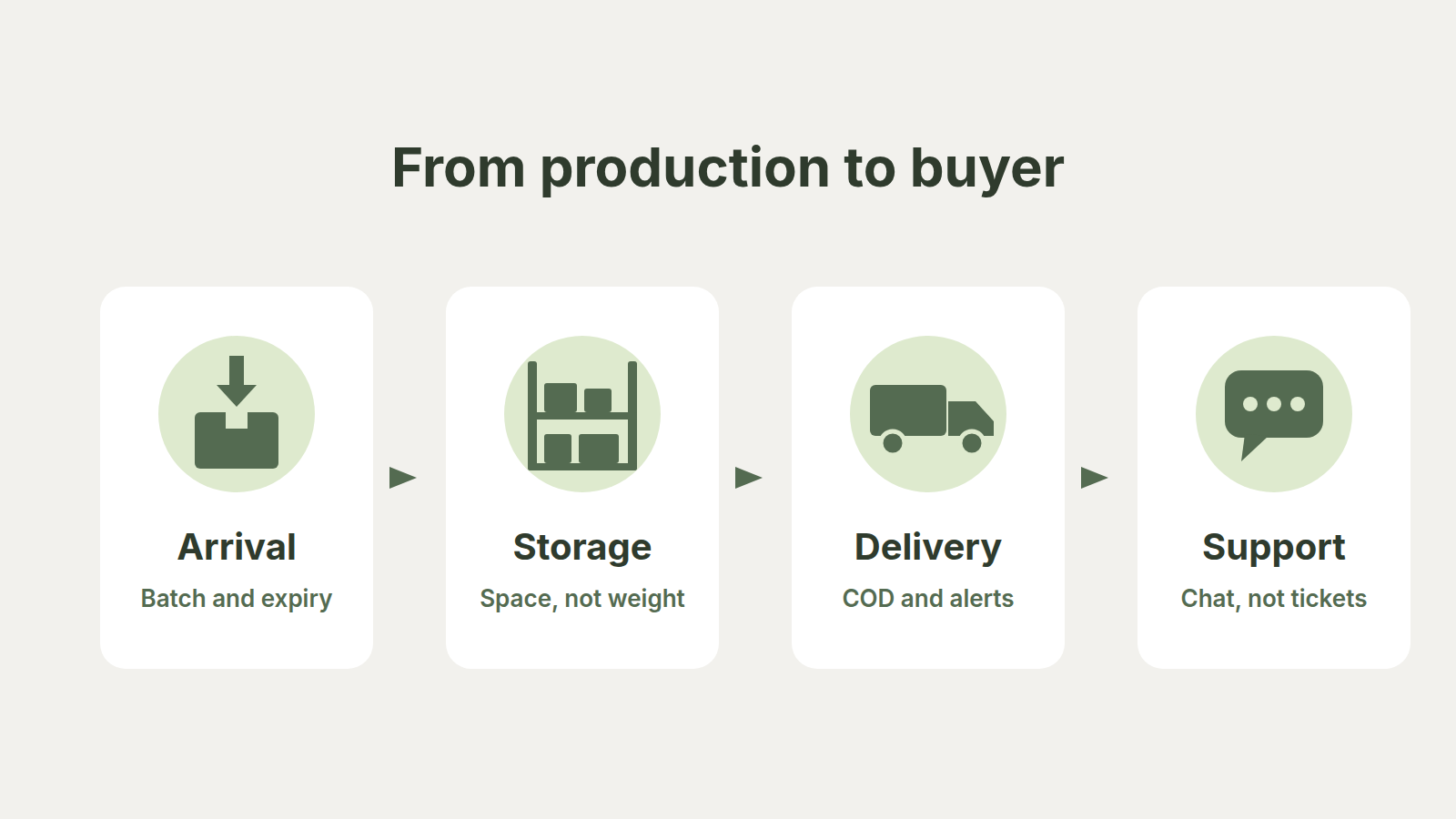
After production, every order has 4 stages: arrival, storage, delivery and support. At each stage, a provider can protect your stock or lose part of it.
Stage 1: when stock arrives
Batch numbers and expiry dates
A good warehouse records the batch number and expiry date of every batch when it arrives. Without this data, the warehouse may send newer stock first, and older stock expires on the shelf. And if you need to recall a batch, nobody knows which buyers received it.
Not every warehouse does this as standard. This is fine if the provider can add it for your stock.
Barcodes and local labels
First production runs, samples and gift sets sometimes arrive without barcodes. A warehouse cannot accept stock that it cannot scan, so the goods wait. A good provider prints barcodes and attaches them when the stock arrives.

EU food law requires the label to be in a language that buyers in the country can easily understand. So a product with a German label cannot be sold in Poland without a Polish label. If the warehouse cannot relabel stock, the stock must return to the factory. The brand then loses weeks of sales and shelf life.

Manufacturer insight: If you know your markets before production, plan the labels with your manufacturer. At BIO-A Group, 1 production run can include several label designs. Each market gets its own label from the start.
Stage 2: while stock is stored
A separate area for supplements
Supplements are food products. They should not share shelves with cleaning products, chemicals or goods with a strong smell. Ask where your stock will be stored. Also ask for the exact temperature and humidity ranges.
No hidden fees
One price per order is easy to compare. But it does not show the full cost. Ask for a quote that shows every fee: receiving, storage, pick and pack, packaging, delivery, COD, returns, labeling and any minimum monthly fee. A minimum fee is normal. A fee that you see for the first time on the invoice is a warning sign.
Storage priced by space, not by weight
A pallet of liquids in glass bottles can weigh about 3 times more than a pallet of capsules of the same size. If the provider charges by weight, the liquids cost 3 times more to store, but they take the same space. If the provider charges by space, both pallets cost the same.
Stage 3: when orders go out
Cash on delivery where buyers pay at the door
In many countries in Europe, online buyers prefer to pay the courier when the parcel arrives. This is called cash on delivery, or COD. Many supplement brands that sell with paid ads get most of their orders this way.
The most important COD number is the buyout rate. It shows how many orders buyers accept and pay for.
Ask each provider 2 questions. In which of my markets do you collect COD? What is the buyout rate there? For example, WAPI is a European fulfillment provider that works with supplement brands. It collects COD in 19 markets in Europe and in Mexico. In its main markets, it reports typical buyout rates of 76–85%.
Also ask how often the provider sends you the money from COD orders. With weekly payments, you have money for your next production batch sooner.
Software that protects buyout and shelf life
Standard warehouse software tracks orders. Supplement brands need more features, for example:
- Holiday calendar. Supplement sales are often highest in January. The system warns you about holidays early, so you can ship stock before carriers close.
- Pickup-point deadline control. A pickup point is a shop or a locker where buyers collect parcels. If nobody collects a parcel in time, it returns to the warehouse with less shelf life. The system shows these parcels early, so your team can contact the buyer.
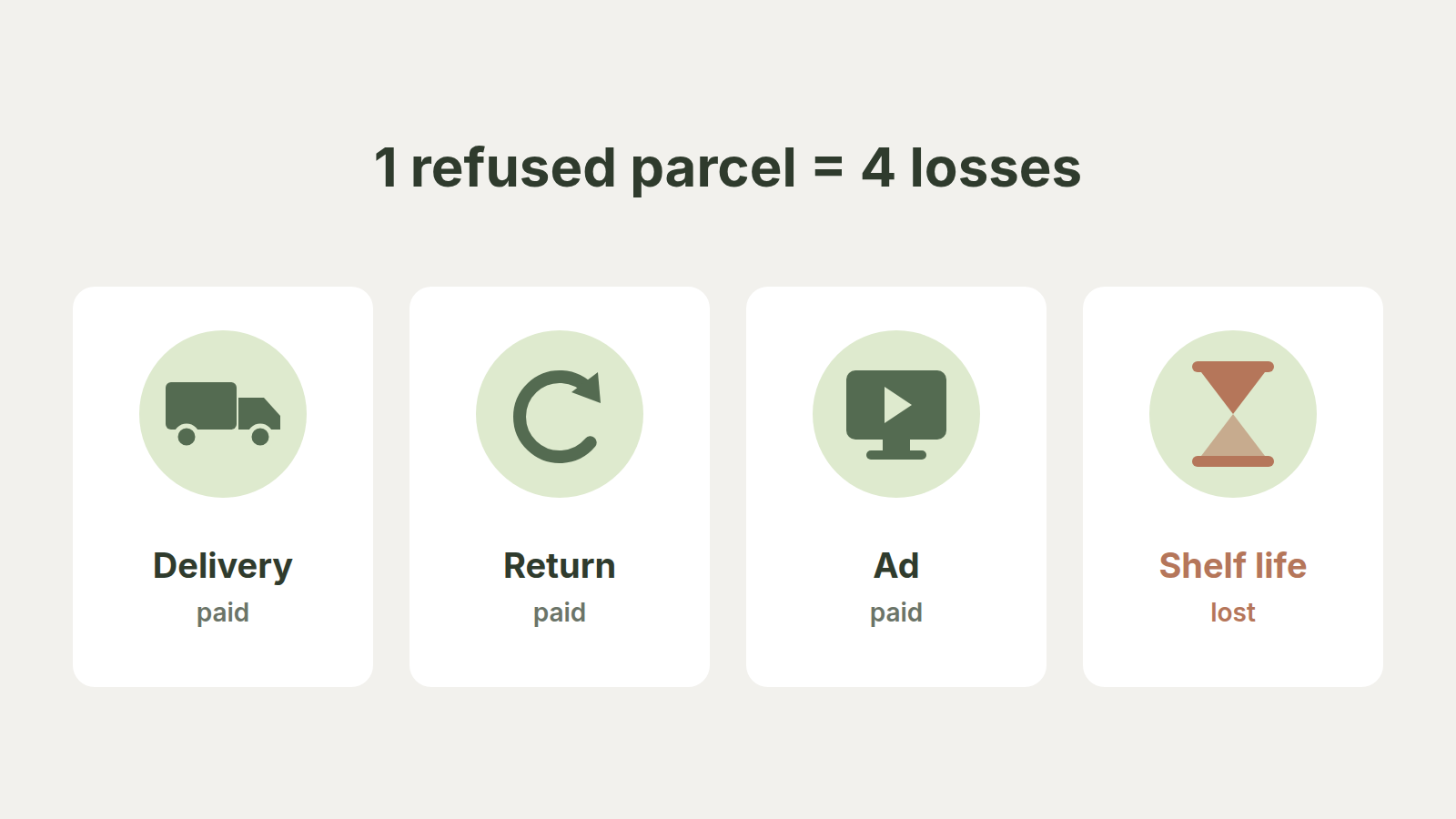
- Refusal reports. Refused parcels cost COD brands the most money. A report by country and by month shows where buyers refuse parcels most often. You can then change the next campaign.
- Automatic extra delivery attempts. People often buy supplements quickly, without much planning. If the first delivery fails, the buyer may decide not to take the parcel. A fast second attempt reduces this risk.

Marketplaces
If you also sell on marketplaces such as Amazon, ask if the provider can prepare stock for their shelf-life rules.
Manufacturer insight: Shelf life starts on the production date, not on the day the stock arrives at the warehouse. Tell your manufacturer where you plan to sell before production starts. Then the manufacturer can plan the production date so that every sales channel gets enough shelf life.
Stage 4: support and partners
Support from people who know your account
COD problems need fast answers. Pickup points keep parcels only for a few days. If you send a ticket on Friday and get an answer on Monday, it may be too late. The best support is a chat with the managers who work on your account, not a ticket system.
Case studies from supplement brands
A case study from a fashion brand does not tell you much about expiry dates or refused parcels. Ask for case studies from supplement brands. A good case study shows the product type, the markets and real numbers.
Manufacturing and VAT partners
A new EU market needs more than a warehouse. A brand may need EU product registration, a VAT registration, new labels or a new batch. We do formulation, registration and contract manufacturing. The fulfillment provider does storage, delivery and payment. When both work with partners, these steps happen at the same time. Ask your provider which manufacturing and VAT partners it works with.

Choosing the right supplement fulfillment partner: questions to ask
A good provider answers with numbers, not with general promises.
If you are still planning your product, talk to us about formats, labels and production dates for your sales channels.

FAQ
How do I find a supplement fulfillment provider in Europe?
Start with your markets. If you sell with COD, look for a provider that collects COD in these countries and shares buyout data. Then ask for supplement case studies and a full quote. Compare at least 3 providers.
What is the difference between a general 3PL and a supplement fulfillment provider?
A supplement provider records batch numbers and expiry dates. It keeps supplements separate from other goods and can relabel stock for local markets. A general 3PL often tracks only products and quantities.
Does BIO-A Group deliver stock to my fulfillment provider?
Yes. We are a manufacturer, not a fulfillment provider. After production, we work with trusted logistics partners to deliver your stock to your customers or to your fulfillment center.
Can BIO-A Group print different labels for different EU markets?
Yes. 1 production run can include several label designs. Tell us your markets before production, and each market gets its own label from the start.
Can BIO-A Group help with EU product registration?
Yes. Our regulatory team prepares the ingredient documents and supports EU product registration. So your product is ready for sale before it reaches the warehouse.